

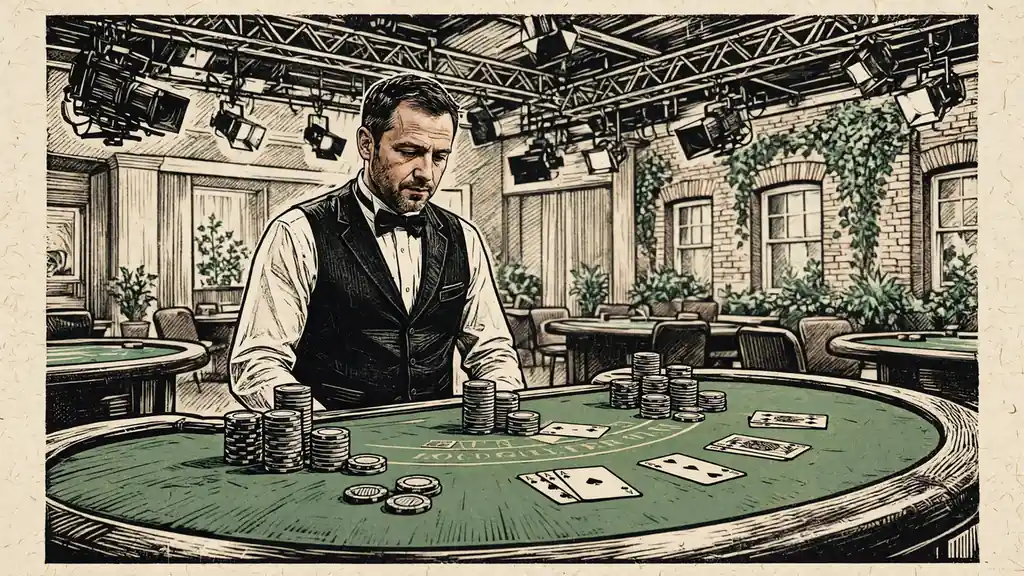
Understand licensing, table rules, game decisions and bonus terms before choosing a live blackjack casino.
How UK Online Blackjack Casinos Are Regulated
A blackjack table streamed from a casino website may look separate from the business running the account, but the operator remains accountable for offering gambling to customers in Great Britain. The UK Gambling Commission (UKGC) regulates commercial gambling there, including online casinos, and is the sole regulator for that activity. Its oversight applies to remote gambling offered to people in Great Britain even when the operator’s key equipment is located elsewhere.
That location rule matters when a company presents itself as based overseas. An operator cannot avoid the relevant British licensing requirement simply by hosting its systems outside the country. To offer remote gambling to consumers in Great Britain, it must hold the appropriate UKGC licence. Online gambling is legal in the UK through licensed and regulated sites; an offshore casino operating outside the UKGC system is not a substitute for a locally licensed operator.
The legal framework is not identical across every part of the UK. The Gambling Act 2005 provides the main gambling law for England, Wales and Scotland, but it does not extend to Northern Ireland. The UKGC nevertheless regulates gambling activity in the United Kingdom, including online casinos. For a customer considering a blackjack account, the practical point is to establish that the business has the relevant authorisation for the market it serves, rather than relying on a site’s branding or its description of where it is based.
What a licence tells you
The Commission grants operating licences to businesses and personal licences to individuals who perform relevant roles in gambling operations. For a player, the key question is whether the business taking deposits and providing the casino is authorised to offer remote gambling to Great Britain customers. A company name on a webpage, a familiar logo or a claim that a casino is “regulated” is not, by itself, proof of that authorisation.
Live Baccarat Online Casinos in the UK
Before depositing, find the operator’s licence number and check it against the UKGC’s public register. Make sure the record corresponds to the company and gambling service you are using, rather than assuming that a similarly named business is the same operator. This is a basic verification, not a guarantee that every feature or experience will suit you. It does, however, let you check whether the business sits within the regulator’s system and is subject to its requirements.
A licensed operator has obligations that affect how an account is opened and managed. It must verify your age before allowing you to deposit, and gambling is legal for adults aged 18 and over where the operator holds a UKGC licence. New customers must be prompted to set a financial limit before their first deposit, and account-level limit controls must remain accessible. These requirements are practical safeguards, not a reason to treat gambling as harmless: only wager what you can afford to lose.
Licensed casinos must also provide responsible-gambling tools, including self-exclusion. Self-exclusion is an account control that lets a customer ask to be prevented from gambling with the operator for a chosen period. If gambling is causing concern, support is available through organisations such as GamCare, BeGambleAware and Gamblers Anonymous. A control can help create distance, but it cannot make losses affordable or remove the need to stop when gambling is no longer manageable.
Accountability when something goes wrong
Licensing also sets out routes for complaints. UKGC licensees must have an internal complaints process and give customers access to an approved Alternative Dispute Resolution (ADR) service. ADR is an independent route for considering a dispute if the operator’s own process has not resolved it. Keep the operator’s complaint instructions and relevant account communications; these can help clarify what happened if you need to raise an issue.
Payment rules form part of the same regulatory framework. Remote gambling operators cannot accept credit-card payments for gambling, including credit-card funds routed through a money service business. They also cannot accept wallet payments where the wallet permits credit-card funds to be used for gambling. These restrictions apply to gambling payments, not as a promise that every other payment method will be available or suitable.
Payment Restrictions
Operators cannot accept credit-card payments for gambling, including funds routed through a money service business. They also cannot accept wallet payments where the wallet permits credit-card funds to be used for gambling.
The Commission also requires operators to contribute to the Research, Education and Treatment levy, which supports work related to gambling harm. That obligation sits with the business, not the customer. It is one part of a broader system of licensing, account controls and complaint routes; none of those measures guarantees a good outcome at a blackjack table.
The useful distinction is between a casino that is accountable to the British regulator and one that merely says it is. Check the actual licence record before paying in, and do not let a familiar presentation stand in for that check. A licence gives the regulator authority over the operator and gives customers defined protections; it does not remove the financial risk of gambling.
How to Assess a Blackjack Casino Before You Sign Up
A casino’s blackjack tables are only one part of the decision. Before creating an account, check who operates the site, whether its licence can be verified, and what controls and complaint routes you would have if something went wrong. A polished design or familiar game title does not answer those questions.
Match the operator to the licence
Find the operator’s legal name and licence details in the site’s footer, terms or responsible-gambling pages. Then search for that business on the UK Gambling Commission’s public register. Check that the licence is current and covers remote casino gambling, and compare the registered business details with the operator named on the site. A licence belonging to a similarly named company is not enough.
Best Keno Online Casinos in the UK: A Guide
Search the register using the operator’s legal name as well as the casino brand. If the details are difficult to locate, inconsistent or absent, pause rather than treating the site’s own claim as proof. The Commission’s register is the place to verify the licence number before depositing.
A specialist review reported that a check of the public register dated 26 September 2026 found no LuckyPays entry under that brand or its stated domain, including luckypays.io. Register information can change, so check the current entry yourself rather than relying on an older review or a logo displayed by a casino.
Identify who is responsible
Read the site’s terms to establish which company would hold your account and handle your complaint. The brand name shown on the homepage may differ from the legal operator. The terms should make the relationship clear; if the operator is hard to identify, that is a reason to stop and investigate.
Look for a complaints policy and details of access to an approved Alternative Dispute Resolution service. These are separate steps: the operator should explain how to raise a complaint internally and how to take it to an independent service if it remains unresolved. Save the relevant pages or correspondence if you proceed, so you can refer back to the terms that applied when you signed up.
Check the account safeguards
A UK-licensed casino should verify your age before allowing a deposit. It should also prompt new customers to set a financial limit before their first deposit and make account-level limit controls accessible. Notice whether those steps are clear and usable, rather than buried in help pages. Consider setting a limit that fits your own budget before playing, and gamble only what you can afford to lose.
Check Before Depositing
- Find the operator’s licence number
- Check it against the UKGC’s public register
- Verify the record corresponds to the company and service
- Set a financial limit for your account
- Confirm the operator is authorised for the UK market
Check the available safer-gambling tools, including self-exclusion. These are not a substitute for deciding whether gambling is right for you, but they matter if you want to restrict access later. You can also check whether the operator participates in GAMSTOP, the national online self-exclusion scheme, and understand what participation means before relying on it.
Payment options are another practical check. UK-licensed casinos cannot accept credit cards for gambling, including credit-card funds routed through a money service business. They also cannot accept wallet payments where the wallet lets you use credit-card funds for gambling. If a payment route appears to contradict these restrictions, do not assume that it is permitted simply because the cashier offers it.
Compare the blackjack offer without chasing claims
Once the operator checks out, compare the information that affects your own use of the site. Can you find the table rules before joining? Are the limits and any fees or conditions displayed clearly? Is the site accessible on the device you intend to use, and can you reach customer support without searching through unrelated pages? These checks help distinguish a useful service from a page that merely makes broad claims.
Do not treat a large game catalogue, a “best” label or a prominent promotion as evidence that a casino is suitable. A bonus has its own conditions and deserves separate scrutiny; it should not distract you from the operator’s identity, licence and account protections. Likewise, an attractive table name does not tell you whether its rules fit your preferences.
French Roulette Online Casinos in the UK: Rules and Odds
If a site does not provide enough information to check its operator, licence, safeguards or complaint process, do not deposit while waiting for clarity. Keep the decision grounded in details you can verify, not in the appearance of the site or assurances that cannot be checked.
What to Expect at a Live Dealer Blackjack Table
A live dealer table brings a human dealer and a streamed game into the online casino. Instead of watching an animation generated entirely by blackjack software, you see a video feed of a dealer handling the cards at a physical table. The casino’s interface sits alongside the stream, allowing you to follow the game and make selections on screen.
That difference is mainly about how the game is presented. In software-based blackjack, a computer generates the game display and processes the cards. At a live table, the dealer is visible on camera, while software connects the action at the table with the choices made by players online. The screen may also show information such as the current hand, available controls and table chat, depending on the casino.
The stream does not make blackjack a private game between you and the dealer. Other players may be seated at the same table through their own devices, and the game proceeds as a shared session. The dealer manages the table; the online interface lets each player take part remotely. You can watch the action as it unfolds rather than relying on a sequence of animated images, but the experience still depends on a digital connection and an on-screen interface.
Live Dealer Experience
The live dealer is visible on camera, while software connects the action at the table with the choices made by players online. The stream is a shared session, and other players may be seated at the same table.
A live dealer blackjack casino can offer tables designed for different kinds of sessions. Some may have a more conventional studio presentation, while others use a more themed setting. The details vary between operators and tables, so the label “live” alone does not tell you what the room looks like, how many players can join or what the table’s conditions are. Those details are shown by the casino for each game.
The format is part of a broader live-casino category, rather than a separate type of gambling site. A live casino may place blackjack beside other streamed table games, with the same general arrangement of dealer-led play and an online interface. Grosvenor first introduced its live casino games in 2013, with card and casino games including Blackjack, Texas Hold’em and Roulette. That history shows that live casino play has been part of the UK online offering for years; it does not mean every operator has the same selection or presentation.
Live Dream Catcher casinos in the UK: what to check
For someone used to software blackjack, the most noticeable change is the visual setting and the presence of a human dealer. The underlying activity remains a casino game, not a broadcast to watch passively: you are expected to follow the table and respond through the controls when play calls for a decision. The stream can make the session feel more like a table in a casino, but it does not remove the need to understand what is happening or to keep track of your own spending.
Live play also has practical limits that are easy to overlook when the stream is the focus. Picture and sound quality depend on your connection and device, and a delay or interruption can make it harder to follow the table. Check that the controls and game information are clear before committing money. If you choose to play for real money, only wager what you can afford to lose.
How Blackjack Works—and What Winning Can and Cannot Mean
Blackjack is a comparison between your hand and the dealer’s. The aim is to finish with a total closer to twenty-one than the dealer’s, without going over. Going over is called busting, and it means the hand loses, even if the dealer later busts too. A hand that does not bust can still lose if the dealer finishes closer to the target.
Cards have values that make the total straightforward to work out: numbered cards count at face value, picture cards count as ten, and an ace can count as either one or eleven. The ace takes whichever value helps the hand without pushing it over twenty-one. A hand containing an ace counted as eleven is often called a soft hand; one where the ace must count as one is a hard hand. The distinction matters because the same apparent total can carry a different risk of busting.
Soft Hand
A hand containing an ace that can count as either one or eleven.
After receiving an initial hand, you decide whether to take another card, known as hitting, or keep your current total, known as standing. Taking a card may improve a weak hand, but it can also make the total exceed twenty-one. Standing avoids that immediate risk but leaves the dealer’s eventual hand to determine the result. Some tables offer additional actions, but their availability and conditions depend on the rules displayed for that game.
A natural blackjack is an opening hand made from an ace and a card worth ten. It is not simply any hand that reaches twenty-one after drawing more cards. How a natural is settled, including what happens if the dealer also has one, depends on the table’s rules. If neither side busts, the higher total wins; matching totals generally result in a tie, sometimes called a push, in which the original wager is returned. Check the table information for the precise settlement terms rather than assuming every game handles edge cases identically.
So how do you win at casino blackjack? In an individual hand, you win by ending with a better result than the dealer under that table’s rules. That answer describes the outcome, not a method for making it happen on demand. The cards dealt are uncertain, and a sound decision cannot guarantee that the next card will help. A hand can be played sensibly and still lose; a poor decision can happen to win. The result of one hand is not proof that the decision was good or bad.
Online Bingo UK: Tickets, Slots and Costs
It is useful to separate the mechanics from the decision-making. Knowing what hitting, standing, busting and a natural mean lets you follow the game and understand why a hand was settled as it was. Deciding which action to take in a particular situation is a separate question, and no choice removes the game’s uncertainty. Nor does a run of wins establish that future hands will follow the same pattern.
Before playing, read the rules shown for the table, since they can affect how hands are settled and which actions are available. Set a limit you can afford to lose, and do not treat a win as a reliable way to recover earlier losses.
Live Casino Games You May Find Alongside Blackjack
Blackjack is one part of a live casino’s table-game selection. Depending on the operator, you may also find other card games and games built around a wheel. The exact range is not the same at every site, so a casino’s live section is a better guide to its current offering than the general label “live casino”.
Grosvenor first introduced its live casino games in 2013, with a selection that included Blackjack, Texas Hold’em and Roulette. Those examples show how broad the category can be: it can bring together familiar casino games with different styles of play, rather than offering several versions of blackjack alone.
Blackjack
It is a card game, and the live format places it among other casino games presented with a human dealer.
Texas Hold’em
A card game associated with poker, with a different appeal and pace than blackjack.
Roulette
A wheel game that offers a different kind of table game compared to card games.
Blackjack remains the natural starting point if you are looking for a live table. It is a card game, and the live format places it among other casino games presented with a human dealer. A casino may show more than one blackjack table, but the number of tables or the rules available can change. Check the information shown for a specific table rather than assuming that the same game is offered in the same way across every site.
Texas Hold’em is another card game you may encounter. It is associated with poker, so its appeal and pace are different from blackjack’s. Its presence in a live casino gives you another option if you want a card game but are not looking for a blackjack table. The name alone does not tell you whether a particular table suits you; read its displayed rules and conditions before joining.
Roulette adds a different kind of table game to the mix. Rather than being another card game, it centres on a wheel and the choices available to players around it. That contrast can make the live-casino lobby easier to navigate: you can look for a card table, a wheel game or another listed category, depending on what you want to play.
These examples should not be treated as a promise that every UK casino offers all three. Operators decide which games appear in their live sections, and a title being available does not mean every table has identical conditions. If you are comparing a casino’s range, look at the games actually listed and open the details for the table you might use. A long catalogue is not, by itself, a reason to deposit.
Live Roulette in the UK: English-Speaking Dealers
Keep the choice separate from the decision to spend. Live games are gambling, and no format removes the possibility of losing money. Only gamble what you can afford to lose.
How to Join and Play a Live Blackjack Game
To play live blackjack online, start by opening an account with a casino licensed by the UK Gambling Commission. Before depositing, verify the operator’s licence number on the Commission’s public register and make sure the entry relates to the site you are using. A familiar-looking name alone is not proof that the account belongs to the licensed business.
During registration, give accurate details. The operator must verify your age before allowing you to deposit, and may need to check other information about you. You may therefore be asked to complete verification before you can fund the account or use its real-money games. Do not try to work around a check by entering different details; an account that cannot be verified may not be usable.
A new customer must be prompted to set a financial limit before making a first deposit. Take a moment to choose a limit that fits your circumstances, and check where the account controls let you review or change it. Licensed casinos must provide accessible account-level limit controls. These are practical safeguards, not a reason to deposit more than you can afford to lose. Only gamble with money you can afford to lose.
Account Verification
During registration, you must provide accurate details. The operator may need to verify your age and other information before you can fund the account or use real-money games.
When your account is ready, open the casino’s live section and select a blackjack table. The game may be available through a web browser or a casino app, depending on the operator. Check that your device and connection can load the live stream, then follow the on-screen instructions to join the table. If you are unsure what a particular table offers, read its displayed information before taking a seat.
If you want to familiarise yourself with the interface first, look for a free-play or practice option. Some casinos may provide a version that uses no real money, but availability and format vary. Check that it is clearly identified as practice play; a real-money table still involves the risk of losing your deposit.
Use a payment method the casino accepts for gambling. UK-licensed operators cannot accept credit cards for this purpose, including credit-card funds routed through a money service business. They also cannot accept a wallet payment if that wallet lets you use credit-card funds to gamble. If a payment is declined, check the method’s terms rather than repeatedly trying different routes.
Once seated, you can follow the table’s prompts to participate. Keep track of the amount you have chosen to spend and use the account controls if you need to pause or set a limit. Joining a table is straightforward; deciding in advance what you can afford to lose is the part worth doing before the game begins.
Blackjack Strategy: Decisions, Not Guarantees
A blackjack strategy is a way to make decisions consistently, rather than relying on instinct or trying to predict the next card. The aim is to choose an action based on the hand in front of you and the dealer’s visible card. That does not remove uncertainty: a sound decision can still be followed by a losing hand.
Fast Payout Online Casinos in the UK: Explained
A basic strategy chart can help organise those choices. It sets out suggested actions for different combinations of your hand and the dealer’s upcard. If you use one, make sure it corresponds to the game you are playing. Blackjack tables can differ in their rules, and a chart based on different conditions may recommend different decisions. Strategy guides are tools for reference, not instructions that override the options and rules shown at the table.
At a live table, take time to consider the decision before you act. A streamed game can feel immediate, but there is no advantage in choosing quickly just to keep pace. Focus on the cards and the relevant guidance, rather than on a recent win, a run of losses or what another player has done. Other players’ choices do not determine what is right for your hand.
Avoid treating a pattern in previous rounds as evidence about what must happen next. Cards already dealt do not make a particular outcome certain, and no strategy can promise a profit. A strategy can help you avoid decisions made purely from frustration or excitement; it cannot make the game risk-free.
It is also sensible to decide in advance how much you are prepared to lose and to stop when you reach that point. Do not increase your wager to try to recover losses, or continue because you feel a win is due. Only gamble with money you can afford to lose.
Strategy Reality
A blackjack strategy is a framework for making decisions, not a guarantee of profit.
For UK players, “blackjack strategy” should mean a framework for decisions, not a claim that a system can beat every table. If you find yourself ignoring your own limits or playing to chase losses, pause and use the account controls or support options available to you. The most useful strategy may be stopping when playing no longer feels manageable.
Blackjack, Live Tables and the UK’s Slot Stake Limits
The UK’s online slot stake limits are sometimes mistaken for a general cap on casino wagers. They are not. A specialist review describes the limits for Great Britain as £5 per slot game cycle for adults aged 25 or over, and £2 for those aged 18 to 24. The distinction is about the game being played, not whether it is offered online or in a live casino.
A game cycle is the period from the start of a slot game until the next cycle can begin. The limits apply to online slots, not to every casino game that uses a screen or accepts a wager. In particular, the same specialist review states that the slot limits do not cover blackjack or roulette. A live blackjack table therefore does not become subject to a slot stake cap simply because you access it through an online casino.
Crazy Time Live Casino Game Show in the UK
That matters when comparing a live table with a slot in the same casino lobby. A slot wager falls within the rules for online slots; a blackjack wager falls under the conditions of that blackjack game. The two products may sit next to each other on screen, but their regulatory treatment is not interchangeable. The table’s own terms still matter, and its limits should not be confused with the statutory limits for slot play.
For a reader looking at live blackjack in 2026, this is the useful boundary: the Great Britain slot limits are not a general maximum for online casino play. They do not set the permitted wager at a blackjack table, whether the dealer is streamed or the game is presented by software. Nor does that mean a table has no limits; it means the slot-specific cap is not the source of them.
The distinction is narrow, but worth keeping clear when you move between games. If you play slots as well as blackjack, the limits relevant to one do not automatically carry over to the other. Whatever the game, only wager what you can afford to lose.
Stake Limits
UK slot stake limits (e.g., £5 for adults aged 25+) do not cover blackjack or roulette.
Blackjack Casino Bonuses: Check the Terms Before You Deposit
A blackjack promotion can look straightforward in its headline and be more conditional in its terms. Before accepting a casino bonus, read the full offer rules and check whether they describe how the promotion applies to blackjack specifically. A bonus advertised across a casino may exclude some games or treat blackjack wagers differently from other play.
Look for the following details:
- Eligibility: Check who can claim the offer, whether you must opt in, and whether it is limited to new customers or particular deposits.
- Game contribution: The terms should explain whether blackjack play counts towards any wagering requirement, and how it is counted. If the wording is unclear, ask the operator before claiming the promotion.
- Expiry and withdrawal conditions: Find out when the offer ends and whether bonus funds, related winnings or both are subject to conditions before withdrawal.
- Wager and table restrictions: Check whether the promotion limits the tables or types of blackjack you can play, or sets conditions on how you use bonus funds. Do not assume every live table qualifies.
- Offer changes: Read what the operator says happens if you withdraw, opt out or otherwise stop using the promotion.
A “no deposit” bonus means the offer is not presented as requiring a deposit to claim it; it does not mean that the funds are automatically withdrawable or free of conditions. Check the eligibility rules, any play-through requirements, and the conditions for cashing out. If you cannot establish what would need to happen before a withdrawal, treat the offer as unclear rather than relying on its headline.
A casino bonus is not extra protection against losses and does not make a wager safer. Consider whether you would still choose to play without the promotion. Do not deposit more, or continue playing longer, simply to unlock an offer. Only gamble what you can afford to lose.
Promotional terms are separate from the rules of the blackjack table itself. Check the offer conditions for bonus eligibility, then review the table’s own rules before playing; the two can impose different restrictions. If the operator’s explanation is ambiguous, keep a copy of the terms and seek clarification before depositing. A bonus is optional, and declining one may be simpler than accepting conditions you do not understand.
Blackjack Casino Rules: What to Check at the Table
A blackjack table can use rules that differ from those at another table, even within the same casino. Before joining, open its information panel or rules page and read the conditions for that specific game. A general casino guide may explain the format, but it cannot confirm the terms attached to the table you are about to play.
Fast Payout Online Casinos UK: What Claims Mean
Start with the payout for a natural blackjack: the hand made from an ace and a ten-value card. Check how the table pays that hand and what happens if both you and the dealer have one. The wording matters; do not assume that a familiar table name means familiar payouts.
Look for the dealer’s instructions on a soft total, which is a hand containing an ace that can count as either one or eleven. The table should state whether the dealer draws or stands in that situation. Also check the conditions for doubling down and splitting pairs: some tables restrict when these options are available or what you may do after using them.
Other details worth confirming include whether surrender is offered, whether you can split again after an initial split, and how insurance is handled. These options may not be available at every table. If the rules are unclear, ask the dealer or support team before wagering rather than relying on assumptions.
For a live game, distinguish the table rules from interface instructions. The screen may explain how to submit an action, while the rules panel sets out what actions are allowed and how hands are settled. Read both if needed, especially before making a wager.
Keep a copy or screenshot of the displayed conditions if you need to refer back to them. If a settlement appears inconsistent with the stated rules, use the casino’s complaints process and, where applicable, its approved Alternative Dispute Resolution service.
Knowing the rules does not remove the risk of losing. Only gamble what you can afford to lose, and stop if the game is no longer within your limits.
Are online casino games licensed and regulated?
Yes. Online casinos serving customers in Great Britain must hold the relevant UK Gambling Commission licence, and the Commission regulates their activity.
What are the online slot stake limits in Great Britain?
The limit is £5 per game cycle for adults aged 25 and over, and £2 for adults aged 18 to 24. These limits apply to slots, not blackjack or roulette.
Is LuckyPays licensed by the UK Gambling Commission?
No UK Gambling Commission entry was found for LuckyPays or its stated domain, luckypays.io, on the register dated 26 September 2026. Check the public register before depositing.
How do I check if an online casino is licensed in the UK?
Find the operator’s legal name and licence details on its site, then search for that business on the UK Gambling Commission’s public register. Check that the licence is current, covers remote casino gambling, and matches the operator you plan to use.
What are the differences between UK-licensed and non-UK-regulated online casinos?
A casino serving customers in Great Britain needs the relevant UK Gambling Commission licence, even if its key equipment is overseas. UK-licensed operators are subject to requirements such as age and financial-limit checks, responsible-gambling tools, and complaint routes; an offshore casino outside the UKGC system does not provide the same regulatory accountability.