

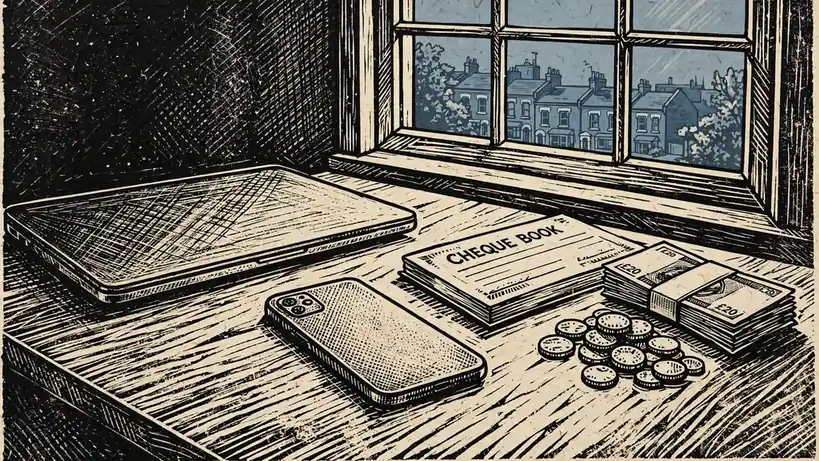
Payment labels can vary, so verify the cashier’s exact option and its instructions before treating a route as an eCheck.
Check what “eCheck” means in a UK casino cashier
If you are looking for casinos that accept eCheck in the UK, start by checking how a casino labels the option in its cashier. “eCheck” is not interchangeable with “bank transfer”: a bank payment may move money between accounts without being presented as an eCheck service. Do not assume that a cashier’s bank-transfer button means it accepts eChecks.
The term can be used differently by payment providers and gambling sites. It may describe an electronic cheque service in one context, while a casino may offer a bank transfer or an open-banking payment under a separate name. Those routes can involve different instructions and conditions. The label matters because it tells you which payment service you are being asked to use; a familiar-sounding description is not enough to establish that two methods are the same.
For that reason, a list headed “eCheck casinos” is useful only if each entry’s current cashier explicitly displays eCheck as a payment option for UK customers. A payment-method page or a general reference to bank payments does not establish that point. Availability can depend on the account and the site’s current offer, so check the deposit screen after signing in rather than relying on an old description elsewhere.
Bank payments are not all eChecks
A bank transfer generally means that funds are sent from a bank account to the recipient’s account. Open banking is a way to initiate a payment through a connection to your bank, with your permission. Both may appear in a casino cashier, but neither should automatically be read as an eCheck. Follow the cashier’s exact wording and instructions, and check whether it identifies a specific provider or service.
A specialist review describes open banking and bank transfers as routes that can support instant deposits and fast withdrawals at many sites. That does not make every bank payment instant, nor does it show that those routes are eChecks. The casino’s own cashier is the relevant place to establish which option it offers and what it calls it.
Casinos That Accept Tether in the UK: What to Check
If the cashier only shows “bank transfer”, treat it as a bank transfer unless the site explains that the option is an eCheck service. If it shows “open banking”, that is the label to assess. If “eCheck” appears explicitly, read the accompanying terms to see which provider handles the payment and whether the method is available to your account. This keeps a search for online casinos that accept eCheck deposits from turning into an assumption based on a loosely related payment label.
What the UK cashier may show instead
UK-facing casino cashiers may present familiar alternatives. Debit cards, including Visa and Mastercard, are commonly accepted in the UK market. Some UKGC-licensed casinos also accept Apple Pay for deposits. Bank transfer and open-banking options may be available at particular sites, while payment providers and available routes vary between operators. None of those descriptions, by itself, confirms an eCheck option.
A specialist review lists Visa and Mastercard among the methods shown on the sites it examined, but that is not a guarantee that either card will work for every UK customer. Check the current cashier for the method and card product you intend to use. A card brand’s logo on a page is not a substitute for confirming that the option is available to you.
The same care applies to currency. A specialist review reports GBP support on the pages it covers, but you should confirm your account currency before making a first payment. If the account is set to another currency, a payment can involve conversion rather than being processed in pounds. Currency information is separate from the question of whether a cashier offers eCheck.
How to read an eCheck claim
When a site or review says it accepts eCheck, look for the exact method in the casino’s payment menu and compare that label with the instructions shown when you select it. A named bank-transfer service is not automatically an eCheck. Nor does the ability to pay from a bank account prove that a particular electronic-cheque product is supported.
DO
- Check the cashier for the exact method name
- Verify the operator’s terms for your specific account
- Confirm the currency before your first transaction
DON’T
- Assume bank transfers or open banking are eChecks
- Rely on a card brand’s logo on a web page
- Use a method based on a general review or advertisement
Check that the page refers to the UK version of the cashier and that the option is available to your own account. A method mentioned in a general payment list may not be offered in every market or at every point in the customer journey. If the cashier does not display eCheck, do not deposit by a different route on the assumption that it will be treated as the same method.
This distinction is especially useful when comparing claims about UK casinos that take eCheck. The practical question is not whether a site accepts some form of electronic bank payment, but whether its live cashier names eCheck and provides instructions for using it. Keep those categories separate: eCheck means eCheck only when the casino presents it as such.
How to assess an online casino’s payment options
A payment logo on a casino’s homepage tells you little about whether that method will work for your account. The cashier is the more useful reference: it shows the options the operator presents for your account and, where the site separates them, which are available for deposits and which for withdrawals. Treat those as two different questions. A method appearing in the deposit menu does not, by itself, establish that you can use it to receive a payout.
Start by opening the cashier while signed in, before choosing a method. Record the exact names shown under both “Deposit” and “Withdraw” (or equivalent labels). If a method appears in only one list, regard it as available for that transaction only. If the cashier does not explain whether the method can be used in both directions, check the payment terms or ask the operator for clarification rather than inferring the answer from a logo or general payment page.
This distinction matters when comparing an eCheck online casino in the UK with other sites. The practical question is not simply whether a site mentions a particular payment label, but whether that option is displayed to you and what the cashier permits it to do. A site’s general description may cover a broader set of customers or circumstances than the account you are using. The signed-in cashier is a better starting point for a like-for-like comparison.
Casinos That Accept Ethereum in the UK
A specialist review of casino payment pages describes options including Visa, Mastercard, bank transfer, e-wallets and several cryptocurrencies. That is a snapshot of the sites it examined, not a guarantee that every method is available at every casino or to every customer. Use such descriptions to decide what to look for, then compare the actual cashier menus. The same method name can be present on one site and absent on another; availability can also differ between the deposit and withdrawal screens.
Make a simple comparison table for the sites you are considering. A row for each payment method and columns for deposit, withdrawal and account currency can expose gaps quickly. Mark a method “confirmed” only when the relevant cashier screen or terms support that use. If the information is unclear, mark it “check with operator” rather than treating silence as approval. This keeps a listed method separate from a usable route.
Currency deserves its own check. A specialist review of the supplied payment pages reports GBP support, but that should not be taken as proof that every account is set to pounds. Look for the currency shown during registration or in the account settings and confirm it before the first transaction. If the account is denominated in another currency, a payment selected in pounds may still involve conversion somewhere in the transaction. Comparing sites on the basis of the displayed currency, rather than assuming it from the intended UK audience, gives you a more reliable picture.
When a cashier shows a choice of payment methods, compare like with like. Check that you are reading the same transaction type on each site: a deposit option on one should not be compared with a withdrawal option on another. Also note whether the method is presented as a named service or as a broader category, such as an e-wallet or bank transfer. A category does not tell you which provider will appear when you proceed, so confirm the specific selection before relying on it.
Do not treat a method’s presence in an operator’s general terms as equivalent to its availability in your account. The cashier may display only a subset of the methods described elsewhere. Conversely, an option visible in the cashier should still be read alongside the relevant terms if those terms explain its permitted use. Your comparison should distinguish between what the operator advertises in general, what the cashier displays for your account, and what the method can actually do for the transaction you intend to make.
Casinos That Accept Boku in the UK: What to Check
For a concise comparison, keep three checks visible for each site: the exact method shown, whether it is listed for deposits and withdrawals, and the account currency. Add a note wherever the cashier’s wording leaves a question unresolved. This approach does not identify a universally suitable casino or payment method; it helps you rule out mismatches before you commit to a route. The useful result is a clear record of what each cashier offers you, rather than a list of payment logos that may not apply to your account.
What to verify before using a casino payment page
A payment method mentioned in a review or on a general payments page is not proof that you can use it from the UK today. Availability can depend on the operator’s current arrangements and on the details of your account. Check the casino’s own cashier after signing in, and make sure it shows the method you intend to use before you rely on it.
This matters if you are looking for a casino that accepts eCheck deposits. A site may describe bank payments or list card brands without offering a cashier option explicitly labelled eCheck. Do not treat a similar-sounding option as equivalent. Use the method only if the casino presents it as available and its terms explain how it works.
Check that the site serves UK customers
Start with the operator’s UK availability and licensing information. A casino serving customers in Great Britain for real-money gambling must hold the relevant UK Gambling Commission operating licence. Check the licence number against the Commission’s public register rather than relying only on a logo or a statement on the site. A licence claim that cannot be matched to the register is a reason to stop before depositing.
Then confirm that the payment page is actually available to you as a UK customer. A general page may describe methods offered in other countries, while the cashier can show a different selection for your location or account. Look for the method in the signed-in cashier, not just in promotional material, a review, or a page that describes the operator’s services broadly.
Casinos That Accept USDC in the UK: What to Check
The wording on a payment page can also be out of date or incomplete. If the cashier does not display the option, do not assume that support can enable it or that a similar route will work instead. Ask the operator to clarify the specific method and wait for a clear answer before proceeding.
Confirm the card product, not just the brand
A specialist review may list Visa and Mastercard among a casino’s payment options. That does not establish that either is currently available to UK customers, or that every card product carrying that brand will be accepted. Check the cashier’s current list and the operator’s terms for the card you hold.
The product type matters. A brand name alone does not tell you whether a particular card is eligible for gambling transactions. If the cashier rejects your card or the terms exclude its product type, do not keep trying by routing the payment through another service. UK rules prohibit credit-card payments for gambling, including credit-card funding routed through a money service business. A wallet cannot be used for gambling if it permits credit-card funds to be used for that purpose.
If the page is unclear about eligibility, contact the operator before entering payment details. Ask whether your specific card product is accepted for a UK account. Do not infer acceptance from a card logo or from the fact that the same card works elsewhere.
Read the terms attached to the option
Once the cashier shows a method, open its accompanying information before selecting it. Check the conditions for using that option, including any stated transaction limits and whether those limits depend on the payment method or account status. Maximum deposits can vary between methods and between accounts, so a figure shown in a general guide may not apply to your cashier.
Make sure you understand any restrictions that could affect whether the transaction is accepted. If the operator’s terms and the cashier display different information, pause and ask which applies to your account. Keep a record of the relevant wording so you can refer back to what was shown when you made your decision.
A clear payment page should identify the available method and provide terms you can understand before you commit. If it does not, the sensible choice is to resolve the uncertainty first—not to test the payment by depositing money.
UK Ban
Credit-card payments for gambling are prohibited in the UK. This restriction includes credit-card funding routed through money service businesses.
Compare payment routes by speed, cost and convenience
A payment method can make a deposit quickly without making a later payout equally quick. The useful comparison is therefore not simply “instant or not”: consider how the route handles both directions, what may delay it and which charges could apply. The cashier’s stated terms matter more than a general description of a payment type.
A specialist casino review reports that open banking and bank transfers can allow instant deposits and fast withdrawals at many sites. That is a qualified observation, not a promise about every cashier. The exact route may differ between casinos, and a payment can still depend on the casino’s own handling. Check the displayed deposit and withdrawal information for the specific method before treating it as a quick option.
The same distinction applies to cards. A specialist casino review notes that a card deposit may appear straight away while a payout to the card takes several business days. A fast incoming payment is not evidence of a fast return journey. If receiving funds promptly matters to you, look at the withdrawal terms as well as the deposit screen; do not judge the route by the moment the money leaves your bank account.
Convenience also depends on what you need to do. A familiar route may be straightforward to select, while a bank-based option may require you to approve a payment through your banking service. Those steps are not necessarily a drawback, but they are part of the process. The cashier should make clear which provider or route it is offering and whether that same option is available for withdrawals.
Costs are less visible than processing time. A specialist payment review identifies several possible sources: a casino charge, a fee from the payment provider, a charge from your card issuer or bank, a currency-conversion spread, and a network fee. Not every transaction will involve all of them, and a displayed casino fee does not necessarily show what another party may charge. Check the casino’s terms and the provider’s own conditions rather than assuming that a route is free because the cashier shows no charge.
Casinos That Accept Click2Pay in the UK
A conversion spread is the difference between the exchange rate used for a transaction and a reference rate. A specialist payment review cautions that this difference can outweigh a visible flat fee. That is why comparing only the listed charge can give an incomplete picture. If the account and payment do not use the same currency, consider the exchange rate and any bank or provider terms too.
There is no payment route that can be called the lowest-cost choice for every person and transaction. A specialist payment review advises comparing casino charges, provider fees, any currency spread and network costs for the payment in question. A route with no casino fee may still carry a charge elsewhere; a route with a stated fee may have other costs that are easier to see. The total depends on the terms that apply to you, not just the method’s name.
For someone considering an eCheck-style payment, speed claims need particular care. A label that sounds like an electronic bank payment does not establish how the transaction is processed, how quickly funds arrive or whether the route is available for withdrawals. Do not transfer timing claims about open banking or bank transfers to a method called eCheck unless the cashier’s terms actually connect them. A specific, clearly described option is more useful than a reassuring label.
When comparing routes, write down what the cashier says about deposit processing, payout availability and any charges, then check whether the payment provider or bank adds separate costs. This keeps speed and price in view together. The fastest deposit may not be the quickest way to receive a payout, and the cheapest-looking option may not have the lowest total cost.
Real-money deposits: amounts, fees and currency
The amount shown beside a deposit button is not necessarily the full cost of funding an account. A specialist review places the stated minimum deposit in the £10–£20 range, with the threshold depending on the payment method. Treat that as a guide to the advertised entry point, not a promise that every cashier will accept the same amount: the limit displayed for your selected route is the one that applies.
The selected deposit and the amount ultimately charged can differ because more than one party may handle the transaction. A specialist review identifies possible costs at casino, payment-provider, card-issuer or bank level, as well as exchange-rate spreads and network fees. Which of these applies depends on the route and transaction. A cashier may show no separate casino fee while another party still charges for processing or conversion, so a visible zero in one place does not establish that the transaction is cost-free.
Casinos That Accept Interac in the UK: Payment Guide
Currency is a particular source of difference. A specialist review reports that GBP is supported, but that does not mean every account is automatically set to pounds. Check the currency shown for your account before making a deposit. If your casino balance and the account or payment instrument funding it use different currencies, a conversion may take place, and the rate used can affect the final debit.
A conversion spread is the gap between the exchange rate applied to the transaction and a reference rate; it is a cost even when it does not appear as a separate line item. A specialist review warns that this can exceed a visible flat fee. Compare the amount the cashier says will be credited with the amount your bank or payment provider says will be debited, and look for any exchange-rate information before confirming. If the figures are presented in different currencies, a direct comparison is not meaningful until they are converted on the same basis.
This matters when assessing an eCheck-style payment as well as a card, wallet or bank route. Do not assume that a method has a particular minimum or that its displayed deposit amount equals the amount leaving your account. The cashier’s own figures, the provider’s charges and the account currency all affect the cost of the specific transaction. Where a fee or conversion rate is unclear, pause rather than infer it from the amount entered.
For a like-for-like comparison, consider the net amount that reaches the casino balance, not only the amount typed into the deposit field. A low stated minimum can still be a poor fit if fees or conversion reduce the value credited. Conversely, a payment route with a visible charge may cost less overall if it avoids a larger exchange-rate spread. The relevant comparison is the total debit against the balance credited, in the currencies actually used.
Casinos that accept iDEAL in the UK: what to check
Before you make an eCheck-style deposit
Before entering payment details, open the casino cashier and check the options available to your account. Do not treat a bank transfer, card payment or another banking service as an eCheck unless the cashier explicitly labels it that way. If the method is not displayed, do not assume it can be used by contacting support or following instructions meant for another country.
Read the payment method’s terms before confirming a deposit. Check whether the cashier identifies any transaction conditions, including whether the option is available to UK customers and whether your account can use it. A method mentioned on a general payment page may not be enabled for every customer.
Specialist casino reviews may list Visa and Mastercard, but that does not establish that either card is currently available to you in the UK. Check the live cashier and confirm that your specific card product is eligible. If the cashier declines the card or does not show it as an option, do not keep retrying with altered details.
Look for the deposit limits shown for the selected method before you submit the payment. Specialist casino reviews note that maximums can differ by transaction, day or month, and may depend on account status. The cashier’s current terms are the practical reference for your account; do not assume a limit stated elsewhere applies to your intended deposit. Check any minimum or maximum displayed and make sure the amount you enter falls within it.
Also confirm the payment details are entered accurately and that the named method is the one you intend to use. If anything is unclear—especially whether a service is genuinely an eCheck—pause and ask the casino to clarify before authorising a transaction. A successful deposit depends on the method being explicitly supported, the account being eligible and the amount fitting the displayed limits.
Keeping casino payment details consistent
For an eCheck-style casino payment in the UK, the payment route should belong to the person who holds the casino account. Use your own account details and a payment account in your own name; mismatches can create avoidable questions about who is funding the gambling account.
Consistency also makes the transaction easier to trace. If you deposit through one named account and later use a different person’s account or another route, the operator may have to clarify the connection before it can process the transaction. That is a practical ownership check, not a reason to enter someone else’s details or try to work around the casino’s controls.
Ukash at UK Casinos: How to Check Payment Support
Where the cashier supports it, using one named account for both deposits and withdrawals can be the clearest arrangement. This does not mean every payment method permits both directions, so check the casino’s stated terms for the specific route. A method shown for deposits alone should not be treated as a withdrawal option.
Before submitting payment details, check that the name and account information match your casino profile and that the payment account is yours. Enter details carefully and use the route you intend to keep using, rather than switching between accounts without a clear need. If your bank or payment provider changes your account details, contact the casino through its official support channel and follow its instructions before making another transaction.
Consistency is not a guarantee that a payment will be accepted or that no further checks will be needed. It simply reduces the chance that basic ownership details become an obstacle. Keep access to your casino and payment accounts private, and do not share login details with anyone claiming they can arrange a deposit on your behalf.
Withdrawals: return routes, checks and timing
A casino may not let you choose any destination you like when you request a payout. UK anti-money laundering rules generally require winnings to be returned to the payment source used to fund the account. This is part of the closed-loop approach: money goes back through an established route rather than being sent to an unrelated account.
That can matter if you are looking for an eCheck casino withdrawal in the UK. The label alone does not establish that a casino offers eCheck deposits, or that it supports withdrawals through the same method. Check the cashier and the withdrawal terms for the specific route available to your account. If the original source cannot receive a payout, the casino may ask you to use an alternative route and complete additional checks before releasing funds.
The withdrawal process can also involve more than the time taken to transfer money. The casino must first review and approve the request. A specialist review notes that this stage can take longer for a first withdrawal while account verification is completed. That is a reported possibility, not a fixed timetable: the operator’s process and the status of your account affect what happens.
Casinos That Accept MuchBetter in the UK: How to Check
Verification is often called KYC, meaning checks on a customer’s identity and account details. If those checks are still outstanding, a withdrawal request may not be ready for approval. Follow the casino’s instructions and make sure the details you provide match the account information it holds. A mismatch can create avoidable questions about who owns the payment source.
Before requesting a payout, read the method-specific terms in the cashier. Confirm which source the casino will use, whether it can return funds to that source, and what happens if it cannot. Treat any displayed processing estimate as subject to the casino’s internal approval; it does not necessarily describe the entire time before money reaches you.
Checking payment access in a casino app
A payment method shown on a casino’s website is not necessarily available in its app. If you want to use an eCheck, open the app’s cashier while signed in and look for that exact option. Do not treat a bank transfer or another bank-linked service as an eCheck unless the cashier describes it that way. No particular casino app can be assumed to support it.
Check the cashier itself rather than relying on an old review or a general list of payment logos. Specialist casino reviews may list Visa and Mastercard, but that does not establish that either card product is currently available to you through the app. Availability in the UK and eligibility of the specific card can depend on what the cashier accepts. If the method you need is absent, do not start a transaction on the assumption that it will appear later.
Before depositing, also find the app’s account-level financial controls. UK rules require remote gambling operators to prompt new customers to set a financial limit before their first deposit and to make limit controls accessible within the account. The prompt and controls may be separate from the cashier, so check the account settings as well as the payment screen. Set a limit that reflects what you can afford to spend; it is a control, not a payment-method setting.
If the app does not make the chosen method or the account controls clear, pause and use the operator’s support channel to ask where they are shown. Avoid entering payment details until you can confirm that the cashier offers the intended route and that the account controls are available. An app icon or payment logo alone is not confirmation that you can use a method for your account.
UK payment rules that affect casino deposits
Payment labels do not change the rules governing how gambling is funded. A method described as an eCheck, bank payment or wallet still has to comply with the restrictions that apply to remote gambling in the UK. Check what the cashier actually offers, but do not assume that a different name makes a prohibited source of funds acceptable.
Credit-card payments for gambling have been banned since 14 April 2020, and the restriction remains in force. UK-licensed remote gambling operators cannot accept a credit card as a direct deposit method. Nor can a payment be routed through a money service business to get around the ban. A debit card is different: the restriction concerns credit-card payments, not debit-card deposits.
The rule also covers some wallet payments. An operator cannot accept a wallet payment for gambling where that wallet permits credit-card funds to be used for gambling. In practice, this means the wallet’s funding arrangements matter, not just the name shown on the casino’s payment page. If you are unsure whether a wallet balance includes credit-card funds, check with the provider and the operator before attempting a deposit.
A casino serving customers in Great Britain must hold the relevant UK Gambling Commission licence. Operators must verify a customer’s age before permitting deposits, and new customers must be prompted to set a financial limit before their first deposit. Account-level limit controls must remain accessible. These are requirements on the operator, not optional features that a payment method can bypass.
An eCheck-style option, if a casino explicitly lists one, is not an exemption from these requirements. The same applies to a bank-linked service or digital wallet: the operator must be able to accept the transaction under the rules, and the source of funds must not turn it into prohibited credit-card gambling. If the cashier’s wording leaves the funding route unclear, seek clarification rather than testing it with a deposit.
What is the fastest withdrawal method for UK casinos?
PayPal, open banking and debit cards linked to fast-payout systems are generally among the quickest. The casino’s approval process and your account verification status also affect how soon you receive the money.
Why can a fast-payout casino still delay my withdrawal?
The casino must approve the withdrawal, and first withdrawals can take longer while it completes verification. Your account’s verification status and the operator’s internal processing affect the timing.
Can I deposit in GBP?
Yes, GBP is supported at the sites covered, but confirm your account currency in the cashier before depositing to avoid conversion.
What is the current minimum deposit?
The minimum usually starts at £10–£20, depending on the payment method.