

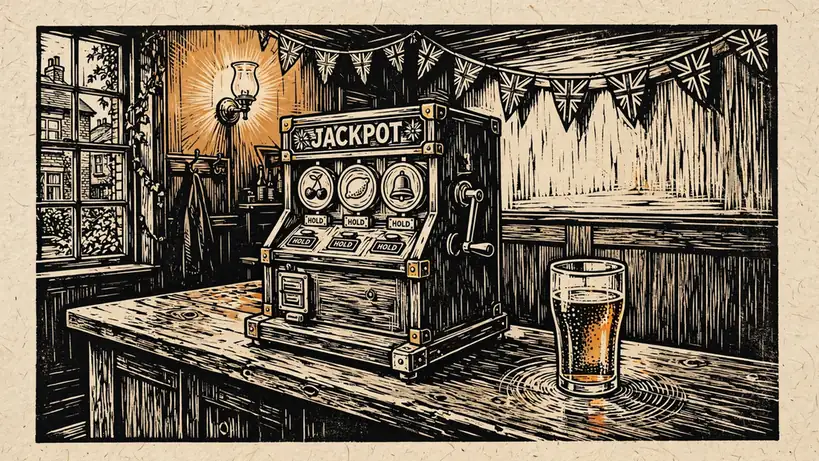
Explore how three-reel slots work, how they compare with video slots, and what to consider when playing free or for real money.
What Three Reels Tell You—and What They Don’t
A three-reel slot is identified by the number of reels shown in its layout. That is useful for recognising the format, but it tells you much less about what happens when you play. Reel count alone does not establish how wins are formed, how frequently they occur, how large they may be, or how much a game might return over time. Those details depend on the individual game, not simply on whether its screen shows three reels.
The familiar appearance of three reels can suggest a straightforward game, but appearance is not a reliable guide to its rules. A compact layout does not automatically mean fewer ways to win, simpler decisions or smaller potential swings. Nor does a larger layout guarantee more complicated play. To understand a particular slot, you need to look beyond the reels and read its rules and paytable: the game’s explanation of winning combinations and the amounts or features associated with them.
It helps to separate three ideas that are often bundled together: layout, game mechanics and financial results. Layout is what the reels look like and how many there are. Mechanics describe how the game determines outcomes and what features may affect play. Financial results concern the relationship between stakes and returns over time. A label such as “three-reel” describes the first of those; it does not, by itself, settle the other two.
Casino Games: Slots, Live Tables and Online Play
A five-reel slot illustrates why reel count is not a measure of how many reels a bet covers. A bet in such a game can be applied across all five reels. The number of reels on screen and the scope of a particular bet are related to the game’s rules, but they are not interchangeable descriptions. Check the game information rather than inferring the betting arrangement from the title or layout.
The same caution applies to words such as “classic”. They may describe a familiar visual style or a category people use when looking for older-looking games, but the label is not a full specification. Two games that both look like classic three-reel slots may differ in their rules and in how their results are distributed. A nostalgic design can be easy to recognise; it cannot tell you whether a game suits your preferences or what its longer-term financial profile is.
Volatility is one term that can help explain the pattern of results. A low-volatility slot distributes returns across many smaller wins. A high-volatility slot tends to pay less often, with larger amounts when it does pay. These are different patterns, not promises about what will happen in a particular session. A slot’s reel count does not reveal its volatility: you cannot identify the likely rhythm or size of returns just by counting the reels.
High-Volatility Slots in the UK: How They Play
That distinction matters because frequent small wins can feel very different from longer intervals between wins, even when neither experience changes the basic financial risk. A run of small returns is not proof that a game is favourable, just as a quiet stretch does not establish that a larger win is due. Each game’s rules and mathematical properties matter more than the impression created by its recent outcomes.
One such property is the house edge: the casino’s mathematical advantage built into a game. Where a game has a positive house edge, its expected result for the player is negative over enough sessions, regardless of whether losses arrive gradually or in less frequent, larger swings. That describes a long-run mathematical expectation, not a prediction of the result of your next spin or session. Short-term outcomes can vary; the underlying expectation does not become positive because the reels look simple or wins appear regularly.
So, when comparing three-reel games, treat the reel count as a starting point for identifying a format, not as a verdict on how the game pays or plays. Then consult the individual rules for the mechanics and the information available about its return pattern and volatility. If you are drawn to three reels because they look familiar, that is a preference about presentation. It is not evidence about the game’s odds, its likelihood of producing a win or the result you should expect.
A three-reel slot is identified by the number of reels in its layout, but this does not determine how wins are formed, their frequency, their size, or the game’s long-term return.
Three-Reel Games and the Five-Reel Alternative
A three-reel slot is identified by the number of reels shown in its layout. That label can help you narrow down the kind of game you are looking at, but it does not tell you everything about how the game works. Two three-reel games may look similar at a glance and still differ in their rules, symbols and available features. The same caution applies when you compare them with five-reel games.
The terms “slot game” and “slot machine” are often used for the same kind of digital product. “Machine” may bring to mind the physical fruit machines found in venues; online, it can simply refer to a game displayed on a screen. So a listing for a three-reel slot machine in the UK does not, by itself, establish whether the game is physical or online. Check the product description and the game screen rather than relying on the label alone.
Reel count describes the layout, not a complete set of rules. It does not establish how many symbols can form a winning combination, whether special symbols appear, or what other features a game offers. Those details are specific to the individual title. A short feature list may help you compare games, but only if it describes the actual game rather than treating all three-reel titles as interchangeable.
RTP for UK Casino Slots: What the Figures Mean
The five-reel alternative is not one uniform type either. A five-reel slot can let you place a bet across all five reels, but that does not mean every game uses the same arrangement or applies bets in the same way. The game’s own rules explain what counts as a bet and how its reels are used. Comparing the visible reel count without reading those rules can make two quite different games seem more alike than they are.
Some descriptions connect reel layout with volatility, a term for how returns are distributed over time. Low-volatility games are associated with more frequent, smaller wins, while high-volatility games tend to pay less often and in larger amounts. These are broad descriptions, not promises about what will happen in a particular session. Nor does a three-reel layout automatically mean low volatility, or a five-reel layout automatically mean high volatility.
Low-volatility slots commonly use five reels and may include many paylines, fixed jackpot amounts rather than progressive pools, and bonus rounds that apply multipliers to accumulated wins. Those are tendencies reported for that category, not a checklist that every five-reel game must meet. They should not be read as standard 3-reel slot features, either: the game’s rules are the dependable place to find what it actually includes.
When browsing online, you may see a title described as a three-reel game, a three-reel machine, or a free three-reel game. The first two labels point to the displayed format; “free” describes a mode of access, not a different reel layout. It is worth keeping those descriptions separate. The format label says little about the game’s full mechanics, while the access label concerns whether you are playing in a free mode or another mode. Neither replaces the rules shown for the individual title.
Do
- Consult individual rules for mechanics and features
- Check game information for betting arrangements
- Use the paytable to understand winning combinations
Don’t
- Infer betting arrangements from the layout alone
- Assume reel count dictates volatility
- Treat the reel count as a verdict on how a game pays
A useful comparison starts with the layout, then moves to the game’s own description. Look for how the reels are arranged, how the game says a bet is applied, and which features it explicitly lists. If a listing only gives you the reel count, treat that as a starting point rather than a verdict on how the game plays.
Playing for Real Money in Great Britain
A three-reel layout does not determine whether a slot is available for real-money play. That depends on the game and the operator offering it. If you choose to play with money, the relevant question is whether the casino is authorised to serve customers in Great Britain—not whether a game looks like a traditional fruit machine.
The UK Gambling Commission oversees commercial gambling in Great Britain, including remote casino services. Its reach does not depend on where an operator keeps the equipment running its games: a business offering remote gambling to people in Great Britain must hold the relevant Commission licence. The regulator issues operating licences to businesses and personal licences to individuals working in the industry. For a player, this is the difference between a casino operating within the British regulatory system and one that is not.
The legal framework also matters when an advert or website presents an overseas location as a reason to overlook licensing. Operators selling remote gambling into the British market are subject to the local licensing requirement even if their servers or other key equipment are elsewhere. An offshore casino without a UK Gambling Commission licence is outside that system. Do not treat a familiar game title, polished website or claim of an overseas licence as a substitute for the required British authorisation.
High RTP Slots in the UK: How to Compare Returns
Stake limits are another part of the real-money context. A specialist review reports that the maximum stake for an online slot game cycle is £5 for a customer aged 25 or over and £2 for a customer aged 18 to 24. The cap applies to the stake for the cycle, not to the number of reels shown on screen. A three-reel game does not receive a different limit simply because it has fewer reels than another slot. These figures concern online slots; they should not be read as rules for every casino game.
A real-money slot also remains gambling, however familiar or simple its presentation may seem. A house edge means the game is mathematically weighted in the operator’s favour. Across enough play, any game with a positive house edge has a negative mathematical expectation for the player. That describes the long-run calculation, not a prediction of what will happen in an individual session: short-term results can vary, and a run of wins does not change the underlying expectation.
The distinction between real-money games and free play is important when browsing. A free version may let you see a game’s presentation without staking money, but it is not the same as a funded game and does not produce a cash payout. This section concerns the rules around gambling with money; free play is a separate activity, not a way to test whether a casino will pay real winnings. Likewise, a real-money offer that appears to require no registration should not be taken at face value: licensed operators must establish a customer’s age before allowing a deposit.
Licensing Check
Before using a casino, verify that its operating licence is current on the Gambling Commission’s public register to ensure the business is authorised.
Before using a casino, check that its operating licence is current on the Gambling Commission’s public register. This is a more meaningful check than relying on a logo displayed on a site, since a logo alone does not establish that the business is authorised. The licence is the starting point for understanding which regulatory system applies to a real-money game. It does not make gambling risk-free, or turn a slot’s design into evidence that it is likely to return your stake.
Free Online Play: A Practice Mode, Not a Payout
Free online play lets you try a slot without staking money. In a free version of an online casino’s three-reel games, the balance shown on screen is simulated: it is not cash in an account, and any credits won in the game cannot be withdrawn or exchanged for a payout. The play may resemble using a real-money slot, but the financial result is different. No matter how large the displayed balance becomes, it remains part of the free-play simulation.
That distinction matters when you are looking for old-fashioned three-reel slots to try. A free classic version can help you understand the basic on-screen controls and see how a game presents its results, without risking money. But it does not create a route to winnings. Credits displayed during play are not a prize waiting to be claimed.
Free play can also be useful if you want to see whether you enjoy a particular style before deciding whether to spend time on it. Treat it as a way to explore the interface, not as evidence that the game will produce a particular result when played for money. A run of wins in a free game does not establish that the same pattern will recur in another session.
Bonus Buy Slots in the UK: How Feature Buys Work
The phrase “high payout” can be confusing in this context. A simulated balance may rise during free play, but that does not mean the game has paid you. Nor does a favourable sequence in practice mode establish what a real-money session would return. The screen can show credits; the free version awards no money.
That also puts “how to win” advice in perspective. You can learn how to use the controls, but free play cannot teach a method for securing a real payout. A win shown in the simulation is only a result within that version of the game. It is not a claim on cash, and it does not guarantee a similar result later.
Keep the two types of play separate in your mind. Free online three-reel slots are for trying a game without paying a stake or receiving winnings. Real-money play involves actual funds and possible financial loss; it is not simply the free game with a different balance. If your aim is to practise, judge the experience by whether you understand the controls and enjoy the format, not by the size of a simulated win.
There is no need to treat a free balance as a budget, a bonus or a promise. It is part of the game’s practice mode. Once you understand that limit, free play can be useful for familiarisation while remaining exactly what it says: play without a payout.
Financial Readiness
- Set a deposit limit that fits your wider budget
- Confirm the operator holds a UK Gambling Commission licence
- Check the current terms and account controls at the operator
- Decide in advance how much you are prepared to spend
Deposits, Limits and Real-Money Sessions
Moving from a practice game to a funded account changes what each spin means: you are staking money, and any result affects your balance. If you choose to play 3 reel slots for real money, treat the amount deposited as money you can afford to lose, not as a sum that a run of wins will replenish. A slot’s appearance or reel count does not make its financial outcome predictable.
Before a first deposit, a remote gambling operator must prompt new customers to set a financial limit. Account-level limit controls must remain accessible, so you can review or change your settings rather than relying on memory. Consider setting a deposit limit before you start, and make it fit your wider budget. A limit is a boundary, not a forecast of how long your funds will last.
A specialist review describes the Great Britain online-slot stake cap as £5 per game cycle for customers aged 25 and over, and £2 for those aged 18 to 24. This is a ceiling on an individual stake, not a recommended amount to bet or a measure of what a session should cost. Your own account limits may set a lower boundary. Check the current terms and controls at the operator before depositing, rather than assuming that the maximum is an appropriate stake.
The central financial point is the house edge: the mathematical advantage built into a gambling game. Where a game has a positive house edge, its expected result for the player is negative over enough sessions. That does not mean every session ends in a loss. Short runs can produce wins, and losses can arrive gradually; neither changes the underlying expectation. A winning spell is not evidence that the game has become more likely to pay.
Best live casino UK: how live play works
This matters when deciding whether to continue after a loss. Raising a stake to recover money increases the amount at risk; it does not alter the game’s probabilities or erase previous results. Equally, a win does not create a reliable basis for increasing the next stake. Decide in advance how much you are prepared to spend and when you will stop, and do not treat a limit as something to override once play is under way.
For 3 reel slots online for real money, the reel layout may make the game look straightforward, but it cannot tell you how a funded session will turn out. Read the game and account information, set your limit, and keep track of the money spent rather than judging play by the number of spins. The same care applies to classic 3 reel slots online: “classic” describes a style, not a safer financial outcome.
Fruit-Machine Paylines, Reels and Odds
When you look at 3 reel fruit machines, the visible reels tell you how many strips of symbols are shown, not how many ways a win can be formed. A payline is a route across the reels on which a matching combination may count. Some games use a line across the centre; others may offer more routes. The layout and rules shown in the game are what determine how combinations are evaluated.
Understanding Odds
Reel layout and appearance are not mathematical descriptions of a game’s odds or paylines.
That distinction matters when you compare 3 reel slot machine paylines. Three reels do not, by themselves, tell you whether a game has one line or several, whether lines are fixed or selectable, or which symbols must match. Nor do they reveal the value assigned to a winning combination. Check the paytable and the game rules rather than treating the reel count as a shortcut for how often a win can occur.
The same caution applies to 3 reel slot machine odds. A reel arrangement is not a probability statement. To assess the chance of an outcome, you would need information about the game’s symbol distribution and rules, not just its appearance. A simple-looking machine does not automatically have better odds, and a busier display does not automatically make a win more likely. The word “fruit” is a familiar style label, not a mathematical description.
A five-reel slot illustrates why reel count and betting structure are separate questions: a bet can be applied across all five reels. That does not mean every five-reel game uses the same paylines, or that all of its reels must form a winning pattern in the same way. Read the individual game’s instructions to see how a wager is assigned and what combinations qualify.
Low volatility is another term that should not be confused with reel count. It describes a pattern of returns: smaller wins are distributed more often than in a high-volatility game, where wins tend to come less frequently and may be larger. Low-volatility games typically have five reels and at least twenty-five paylines, fixed jackpot amounts rather than progressive pools, and bonus rounds that apply multipliers to accumulated wins. Those are common characteristics of that category, not a rule for every machine with three reels—or a guarantee of a particular result.
Online Slots Payout Percentage: How RTP Is Measured
For a player comparing games, volatility and paylines answer different questions. Paylines describe the paths or combinations that can qualify for a win under the rules. Volatility describes the general distribution of returns. Neither term can be read directly from the number of reels, and neither tells you what a particular spin will produce.
Online, the useful approach is to inspect the game information before playing: identify the active lines or other qualifying patterns, see which symbols and combinations pay, and note how the stake is applied. If the interface shows several lines, that alone does not establish that every line is active. Likewise, a three-reel display is no evidence that there is only one way to win.
The label 3 reel slot machines online can cover games with different rules and presentation. Treat the title or artwork as an introduction, not a substitute for the paytable. Reel count tells you what is on screen; the rules explain how outcomes are counted, and the game’s odds cannot be inferred from that count alone.
No-Download Play and How Reels Differ from Video Slots
A slot that runs in a web browser may be playable without installing a separate application. You open the casino’s site, sign in if required, and launch a game through the page. Whether that works on your device depends on the site and the game; “no download” describes how you access it, not a particular kind of slot.
No-Download Play
Allows you to launch a game through a web browser without installing a separate application.
Free Online Play
A simulation mode used to explore controls and interfaces without staking real money.
Video Slots
A screen-based presentation that may include various reel counts and features.
The same distinction matters when you see free games described as available online without a deposit. That wording refers to access to a free-play version, where offered. It does not mean the game pays withdrawable winnings. Free-play balances are simulated, so a result on screen is not a cash payout. A real-money version, if offered, is a separate mode.
“Reel-based” and “video slot” describe presentation, while the number of reels describes the game’s layout. A three-reel game can be presented on screen, just as a five-reel game can. These labels therefore do not identify two mutually exclusive kinds of software: a video slot may display reels, and the reel count alone does not tell you whether a game is called a video slot.
The layout can also shape how a bet is represented. In a five-reel game, a wager may be set to cover all five reels. That says something about how the stake is applied, but not whether the game is accessed through a browser or an installed app, nor whether its presentation is classed as video.
When comparing a classic-looking reel display with a more graphic-heavy game, focus on what is actually shown and how the game is accessed. A familiar reel image does not by itself establish that the software is old-fashioned, simpler to play, or available in a particular mode. Likewise, animations and visual effects do not tell you the reel count or whether a free version is available.
First Deposit Bonus Casinos in the UK: What to Check
If you want to play without installing software, look for browser access and check whether the particular game opens on your device. If you want a free version, check that the game is explicitly marked as free play. Those are separate checks: one concerns delivery, the other concerns whether you are staking money. Neither label, on its own, tells you how a slot works.
Reading the Three-Reel Slot Format
A three-reel slot is named for the number of reels shown in its layout: three vertical columns of symbols. That label describes the arrangement, not the way a wager is calculated. A game’s reel count does not, by itself, tell you how many bets are active or which parts of the layout a stake covers.
It helps to keep those ideas separate when reading a game’s rules. “Three reels” answers a visual question: how many reels does the game display? The stake rules answer a different one: what does your selected bet apply to? A five-reel slot, for instance, can have a bet applied across all five reels. The number of reels and the scope of a bet are related only when the game’s rules make them so; one cannot be inferred from the other.
This distinction matters because familiar labels can sound more informative than they are. Seeing three reels does not establish that you are placing three separate bets, nor does it explain how a particular stake is distributed. Likewise, a larger reel count does not automatically mean that a game requires a bet on every reel. The game’s own instructions are what clarify how its wager works.
Three Reels
A layout consisting of three vertical columns of symbols used to identify a specific slot format.
When you encounter a three-reel slot, treat the name as a description of its layout rather than a complete guide to play. Check the displayed rules for the way a bet is applied, and keep that information distinct from the reel count. That small distinction makes it easier to compare formats without assuming that a visual feature also defines the game’s betting structure.
Classic Three-Reel Slots and Their Familiar Look
A classic three-reel slot is best understood as a style label attached to a game with three reels, rather than a promise about exactly how it works. “Classic” suggests a traditional slot presentation, but the word alone does not tell you what symbols appear, how a win is formed or what other features are included. Those details belong to the individual game, not the category name.
That distinction matters when you are browsing. Two games can both be described as classic three-reel slots without sharing every visual or play feature. The label gives you a broad idea of the format; it is not a specification. If a particular detail matters to you, look for it in the game’s own information rather than assuming it follows from the word “classic”.
The three-reel part is more concrete: it describes the number of reels in the game. It does not, by itself, tell you how many bets are applied, how a result is evaluated or what a session will feel like. A familiar appearance can make a game seem straightforward, but familiarity is not the same as knowing its rules.
This is also why “classic” should not be treated as a promise of a particular kind of experience. It may help you identify the broad style you have in mind, but the label cannot replace the rules and information for the specific title. Read those before you play, especially if you are comparing games that share the same description.
In short, the phrase points to a traditional three-reel category, not a single standard design. Use it to narrow what you are looking at, then judge each game by its own presentation and rules.
Classic Reels and Video Slots: A Format Comparison
“Classic” and “video” describe different ways a slot may be presented, but the labels do not tell you everything about how a game works. A classic reel-based slot puts the reels at the centre of the experience. A video slot uses a screen-based presentation, but that label alone does not establish how many reels it has, how a bet is structured or what features it offers.
That distinction matters when you compare games. A simple-looking reel display does not, by itself, tell you whether the game has a particular paytable or betting arrangement. Nor does the video-slot label guarantee extra features. The rules and paytable for the individual game are more informative than a broad format name.
Reel count and stake structure are separate questions, too. For instance, a game with five reels may allow a bet to cover every reel at once. That describes how a bet can be applied; it does not make every five-reel game work that way, or define the difference between classic and video formats.
If you prefer a straightforward reel-based presentation, the classic label may help you narrow the field. If you are considering a video slot, inspect its own rules rather than assuming that the format signals a particular level of complexity. Neither category guarantees a certain pace, return pattern or set of features.
The useful comparison, then, is not that one format is inherently simpler or more generous. It is that the labels point to broad presentation styles, while the details that affect an individual game sit in its own rules. Treat “classic” and “video” as starting descriptions, not substitutes for checking what the game actually offers.