

Bonus Types Defined
Casino bonuses fall into two fundamental categories based on whether the bonus amount itself can eventually become withdrawable. Understanding this distinction prevents confusion about what you’re actually receiving and what outcomes are possible.
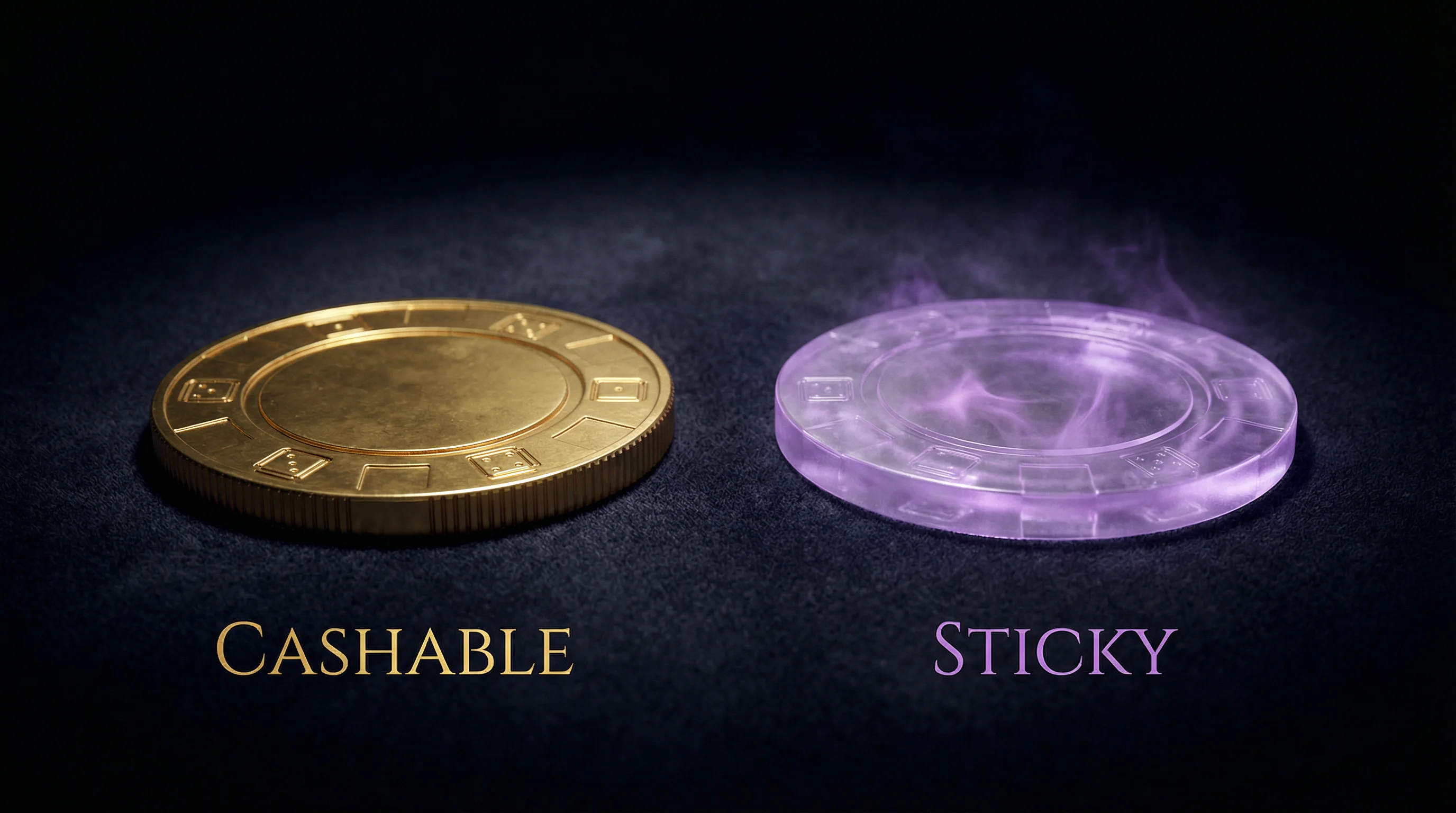
Non-sticky bonuses (also called cashable or convertible bonuses) transform into withdrawable cash upon completing wagering requirements. A £100 non-sticky bonus that you clear successfully adds £100 to your withdrawable balance—the bonus itself becomes real money you can cash out.
Sticky bonuses (also called phantom, non-cashable, or play-only bonuses) never become withdrawable. A £100 sticky bonus provides £100 of playing balance that disappears upon withdrawal. Only winnings generated from bonus play can potentially be withdrawn; the bonus amount itself always belongs to the casino.
The terminology varies between casinos and regions. “Sticky” originates from poker bonus terminology; “phantom” references the ephemeral nature of the funds. “Non-cashable” describes the outcome directly. Whatever the label, the core distinction remains: can the bonus amount itself eventually reach your bank account, or only winnings above it?
This distinction matters enormously for value assessment. Identical-looking bonuses—same percentage, same wagering—can have very different actual values depending on their sticky or non-sticky nature. A £100 non-sticky bonus with 10x wagering is worth far more than a £100 sticky bonus with identical terms.
Terms documents should specify which type applies, though language isn’t always clear. Phrases like “bonus cannot be withdrawn” or “only winnings from bonus play are withdrawable” indicate sticky structures.
How Each Works
The mechanical differences between sticky and non-sticky bonuses affect gameplay experience and withdrawal outcomes in distinct ways. Understanding these mechanics helps you anticipate what happens at various stages.
Non-sticky bonus mechanics operate straightforwardly. You receive bonus funds that function alongside cash funds during play. As you wager, the combined balance fluctuates based on wins and losses. Upon completing wagering requirements, everything remaining—original deposit, bonus, and any winnings—converts to withdrawable cash. The bonus amount genuinely becomes yours.
Sticky bonus mechanics introduce complexity at withdrawal. During play, sticky bonuses function identically to non-sticky—your balance rises and falls normally. The difference emerges when you request withdrawal. At that point, the sticky bonus amount subtracts from your balance. If you built £500 from a £100 deposit plus £100 sticky bonus, withdrawal would release £400 (£500 minus the £100 sticky bonus).
Balance calculation during sticky bonus play requires mental adjustment. Your displayed balance includes funds you can never actually withdraw. A £300 balance with £100 sticky bonus means £200 genuine value, not £300. This difference matters for bankroll management and profit expectations.
Early withdrawal effects differ between types. With non-sticky bonuses, early withdrawal typically forfeits the bonus and possibly associated winnings. With sticky bonuses, the bonus was never going to become cash anyway—but early withdrawal still might forfeit winnings depending on specific terms.
Wagering requirements apply similarly to both types, counting toward clearing regardless of sticky status. The difference lies entirely in what happens after requirements complete: non-sticky bonus becomes cash; sticky bonus disappears while accumulated winnings remain.
UK Regulatory Context
The UK regulatory environment shapes how bonus types appear in the market. UKGC requirements affect disclosure, fairness, and the prevalence of different bonus structures among licensed operators.
Non-sticky bonuses dominate the UK market for welcome offers. The regulatory emphasis on transparent, achievable promotions favors bonus structures where players understand clearly what they can receive. Non-sticky bonuses align naturally with this transparency goal.
Sticky bonuses appear less commonly in standard UK welcome offers but still exist in certain contexts. Some casinos use sticky structures for specific promotions, particularly no-deposit bonuses where the casino provides funds without requiring deposit. The sticky structure limits potential liability from these entirely free offers.
Disclosure requirements mandate that casinos explain how bonuses function before players claim them. Whether sticky or non-sticky, the nature of the bonus must be clearly communicated. UKGC enforcement discourages obscure terms that only reveal sticky status after claiming.
The 2026 wagering cap applies to both bonus types. Whether sticky or non-sticky, wagering requirements cannot exceed 10x the bonus amount. This regulation improves achievability regardless of bonus structure.
Deposit protection rules ensure your deposited funds remain accessible regardless of bonus type. Sticky bonuses can’t trap deposits behind unachievable requirements—your own money remains yours even if bonus funds are non-withdrawable.
Comparing international markets highlights UK advantages. Some jurisdictions still permit extreme wagering requirements and deceptive sticky bonus marketing. UK regulation creates a more player-friendly environment for both bonus types.
Which Suits You
The sticky versus non-sticky question affects different player types differently. Understanding which structure serves your preferences helps you select appropriate offers.
Value-focused players generally prefer non-sticky bonuses. The ability to withdraw the bonus amount itself adds substantial value. Expected value calculations improve significantly when bonus funds can become real money. For pure mathematical optimization, non-sticky structure is superior.
Risk-tolerant players sometimes find sticky bonuses useful for variance-seeking strategies. Since the sticky bonus wasn’t becoming cash anyway, some players employ higher-variance approaches seeking big wins rather than steady clearing. This strategy carries risks but has internal logic.
Casual players may find the distinction less critical. If you’re playing primarily for entertainment and not carefully calculating expected values, the bonus type matters less than overall enjoyment. Both structures extend play time; the mathematical difference may not affect subjective experience significantly.
No-deposit bonus seekers encounter sticky structures frequently. Since these offers require no deposit, casinos protect themselves through sticky mechanics. Accepting sticky no-deposit bonuses makes sense because you’ve risked nothing—any withdrawable winnings represent pure gain.
Frequent bonus hunters prioritize non-sticky offers. When claiming multiple bonuses across casinos, the cumulative effect of sticky versus non-sticky structures compounds. Consistently selecting non-sticky bonuses produces meaningfully better aggregate outcomes.
Before claiming any bonus, verify which type you’re receiving. The information should appear in terms documents. When unclear, assume sticky unless explicitly stated otherwise, and adjust value expectations accordingly.
FAQ
How can I tell if a bonus is sticky before claiming?
Check terms and conditions for phrases indicating non-withdrawable bonus amounts. Language like “bonus cannot be withdrawn,” “only winnings are withdrawable,” “play-only bonus,” or “phantom bonus” indicates sticky structure. Non-sticky bonuses often state “bonus becomes withdrawable” or “bonus converts to cash” upon clearing. If terms are ambiguous, contact support for explicit confirmation before claiming. Screenshots or chat logs documenting the response protect you if disputes arise later.
Are sticky bonuses always worse than non-sticky?
From pure value perspective, yes—non-sticky bonuses are mathematically superior given identical other terms. However, context matters. A sticky bonus with 3x wagering might outperform a non-sticky bonus with 10x wagering. No-deposit sticky bonuses provide risk-free value since you’ve invested nothing. Some sticky bonuses offer higher match percentages compensating for their non-withdrawable nature. Evaluate complete terms packages rather than rejecting all sticky bonuses categorically.
Cashable Clarity
The sticky versus non-sticky distinction fundamentally affects bonus value. Understanding which type you’re receiving before claiming prevents mistaken expectations and enables accurate value assessment.
Non-sticky bonuses provide superior value when other terms are equal. The bonus amount itself can become withdrawable cash, adding value that sticky structures simply cannot match. For players optimizing expected returns, non-sticky preference makes mathematical sense.
Sticky bonuses still have appropriate uses. No-deposit offers, where you’ve risked nothing, provide free play with potential upside regardless of sticky mechanics. Specific promotions with compensating terms may justify sticky structures. The key is knowing what you’re receiving.
UK regulatory environment favors clear disclosure. Casinos must explain bonus mechanics before you claim, and non-sticky structures dominate the market. This transparency helps players make informed decisions that offshore markets may not provide.
Verification before claiming protects against surprises. Check terms specifically for language about bonus withdrawability. When unclear, ask support directly and document their response. Assumptions about bonus type can lead to disappointed expectations.
Different player profiles relate differently to the distinction. Value-focused players prioritize non-sticky; casual players may care less about the difference; risk-tolerant players sometimes use sticky bonuses strategically. Know your own priorities.
The fundamental rule: understand before you claim. Whether sticky or non-sticky, informed acceptance of clear terms leads to appropriate expectations and satisfactory outcomes.
Learn more about bonus types at onlinecasinowelcome. Also read our casino bonus terms explained.